
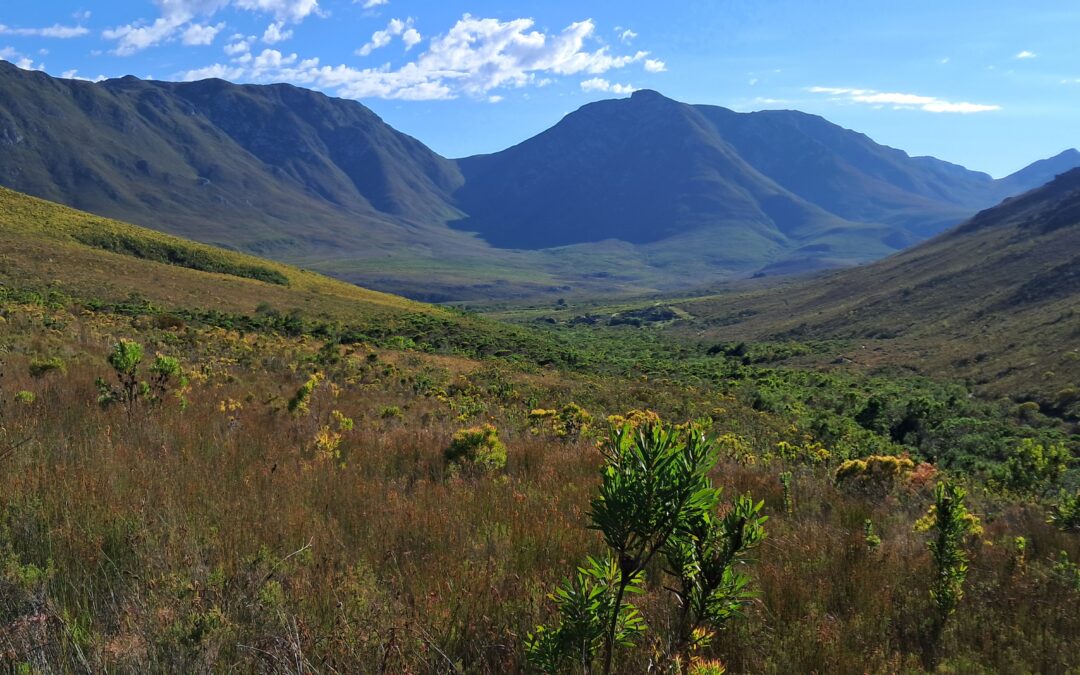
South Africa’s Untamed Natural Treasure
Nestled between rugged mountains and the wild Atlantic coastline of the Western Cape lies one of South Africa’s most extraordinary natural landscapes: the Kogelberg Biosphere Reserve. The Reserve was proclaimed in 1999. Often referred to as the “heart of the Cape Floral Kingdom,” this UNESCO-recognised biosphere is a sanctuary of biodiversity, dramatic scenery, and ecological importance. It remains one of South Africa’s most rewarding hidden gems for nature lovers, hikers, photographers, and eco-travellers alike. Penguin Trail hikers can enjoy three days of coastal and mountain hikes in the biosphere.
Located roughly an hour’s drive from Cape Town, the reserve stretches across mountains, rivers, forests, wetlands, and coastline. It covers more than 100,000 hectares and includes the town of Kleinmond and the villages of Betty’s Bay, Pringle Bay, and Rooi Els. Despite its accessibility, the region feels wonderfully untouched, offering visitors an authentic connection to South Africa’s natural beauty.
What makes the Kogelberg Biosphere so unique is its remarkable plant diversity. The reserve forms part of the Cape Floral Region, the smallest yet richest of the world’s six floral kingdoms. Incredibly, the area contains more plant species per square kilometre than tropical rainforests. Thousands of species of fynbos thrive here, including proteas, ericas, and restios, many of which are found nowhere else on Earth.
During spring, the landscape transforms into a spectacular tapestry of colour. Wildflowers blanket the hillsides, attracting pollinators such as sunbirds, bees, and butterflies. The air carries the earthy fragrance of fynbos after rainfall, while mountain streams cut through valleys lined with indigenous vegetation. For botanists and photographers, the biosphere is nothing short of paradise.
Beyond its floral richness, the Kogelberg Biosphere is also home to an impressive variety of wildlife. Penguin Trail hikers may encounter baboons, mongoose, otters, and several species of antelope. Bird enthusiasts can spot a variety of birds in the mountain fynbos and a variety of raptors soaring above the cliffs on the mountain trails, as well as a variety of shore birds on the coastal trails. Cape fur seals may often be seen basking on the rocks along the coastline, and southern right whales are regular visitors in winter and spring.
One of the reserve’s most iconic attractions is Harold Porter National Botanical Garden, and Penguin Trail hikers are able to enjoy several hours in the garden on day three of the trail. Situated at the foot of the Kogelberg Mountains, this botanical garden blends cultivated indigenous flora with pristine natural landscapes. Gentle walking trails lead visitors through waterfalls, forests, and flower-filled gardens, all framed by dramatic mountain backdrops. Unlike many manicured botanical gardens, Harold Porter feels wild and immersive, allowing visitors to experience nature in its raw form.
The Stony Point Penguin Colony is home to a colony of critically endangered African penguins, and our Penguin Trail ends at the colony on day four.
Conservation remains at the heart of the Kogelberg Biosphere’s identity. As a UNESCO Biosphere Reserve, the region balances environmental protection with sustainable development. Local communities, conservation organisations, and researchers work together to preserve the delicate ecosystem while supporting responsible tourism and livelihoods. Ongoing efforts focus on combating invasive plant species, reducing wildfire risks, and protecting endangered wildlife habitats.
Climate change and urban expansion continue to pose challenges for ecosystems across the globe, making places like the Kogelberg Biosphere increasingly important. The reserve serves not only as a haven for biodiversity but also as a living example of how humans and nature can coexist sustainably. Visitors are encouraged to travel responsibly, support local businesses, and respect the fragile environment that makes the region so exceptional.
Perhaps the greatest magic of the Kogelberg Biosphere lies in its atmosphere. Unlike heavily commercialised destinations, the area invites travellers to slow down and reconnect with the natural world. Here, mornings begin with mist drifting over mountains, afternoons unfold beside quiet rivers and beaches, and evenings end beneath star-filled skies untouched by city lights.
For travellers seeking a deeper, more meaningful South African experience, the Kogelberg Biosphere offers something rare: a sense of wilderness that still feels pure and undiscovered. Penguin Trail hikers are sure to leave with a renewed appreciation for the extraordinary beauty of the natural world.
In a rapidly changing world, the Kogelberg Biosphere stands as a reminder that some places remain gloriously wild — and worth protecting for generations to come.