
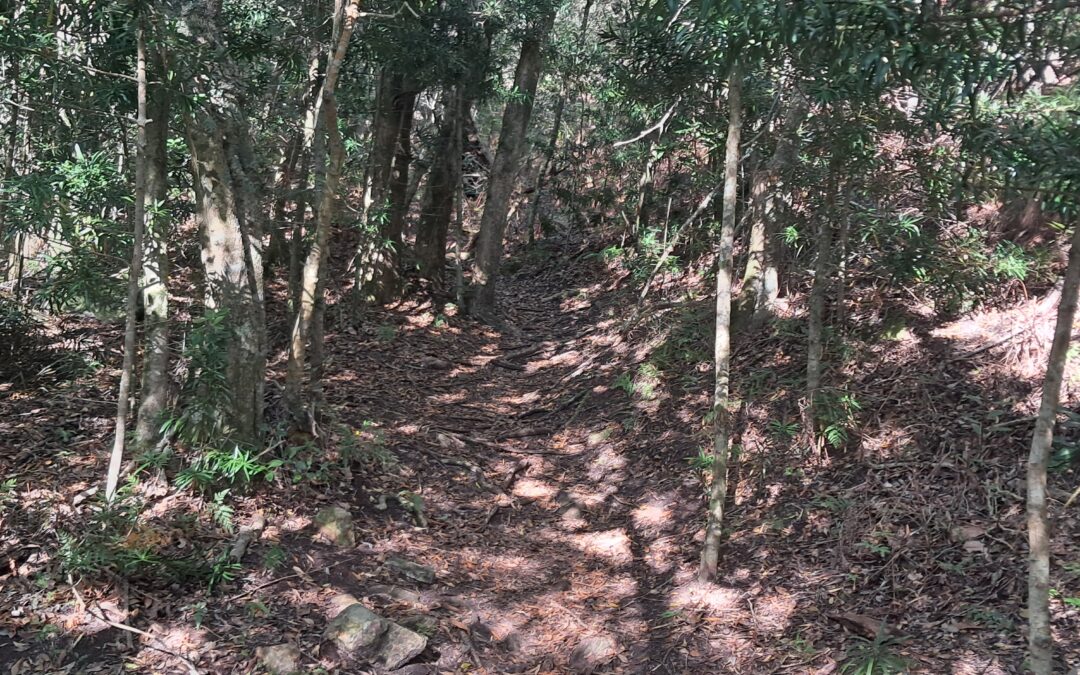
High on the slopes and in the sheltered valleys of the Kogelberg, where steep mountains meet the moist coastal climate of the southern Cape, small patches of indigenous forest form some of the region’s most remarkable natural communities. These Afromontane forests are very different from the surrounding fynbos. Darker, greener and more enclosed, they occupy protected gullies, ravines and kloofs where moisture, shade and shelter create conditions favourable to trees and forest-loving plants. The trail from the Oudebosch office to the Harold Porter Gardens on the second day of the Penguin Trail takes us through forests in the Oudebosch valley and in the Disa Kloof.
Although forests cover only a small proportion of the Kogelberg landscape, they are important remnants of a much older vegetation tradition. They provide a glimpse into the complex natural history of the Cape mountains and contribute greatly to the biodiversity for which the Kogelberg Biosphere is renowned.
Forest islands in a fynbos landscape
The Kogelberg is best known for its extraordinary fynbos, particularly its rich assortment of proteas, ericas, restios, orchids and other flowering plants. Yet within this seemingly endless landscape of shrubs and grasses are sheltered places where trees can survive.
These forest patches are usually found in moist kloofs and steep ravines, particularly where streams provide a reliable supply of water. The surrounding mountains protect them from drying winds and intense sunlight, while the dense vegetation creates a cool, humid environment beneath the canopy.
This creates a striking contrast. Hikers may walk through open fynbos, surrounded by low-growing shrubs and sweeping mountain views, and suddenly enter a shaded forest where the temperature drops, the vegetation becomes taller and the sound of running water replaces the wind.
Ancient survivors
Afromontane forests are part of a distinctive vegetation type found in mountainous regions of Africa. In southern Africa they occur as relatively isolated patches, separated from one another by areas of grassland, fynbos, woodland or other vegetation.
Their fragmented distribution is a reminder of a changing climate and landscape. Forests that once occupied more extensive areas have, over immense periods of time, become restricted to places where local conditions remain suitable. The sheltered valleys of the Kogelberg provide some of these refuges.
The trees and plants found in these forests therefore represent more than just another component of the Cape landscape. They are survivors of changing environmental conditions and form living links with the region’s botanical past.
A shaded world of trees and plants
Walking through Kogelberg forests is an experience quite unlike walking through open fynbos. The canopy filters the sunlight, producing dappled shade on the forest floor. Mosses, ferns, climbers and shade-loving herbs flourish in the damp conditions, while fallen leaves and branches contribute organic matter to the soil.
Trees such as yellowwood (Podocarpus latifolius), hard pear (Olinia ventosa), Cape beech (Rapanea melanophloeos), and other indigenous species can occur in these sheltered environments. Their presence creates layers of vegetation, from the canopy high above to shrubs, herbs and groundcover below.
Ferns are particularly characteristic of moist forest habitats. In damp ravines, they can grow among rocks and beside streams, taking advantage of the humid conditions. Mosses and lichens colonise tree trunks and shaded rocks, adding to the impression of an ancient, self-contained ecosystem.
Wildlife in the forest
The forests also provide a valuable habitat for animals. Birds are especially important members of the forest community. Species that prefer dense vegetation and sheltered habitats can find food, nesting sites and protection among the trees.
Insects, spiders and other invertebrates are equally important, although they are often overlooked. They pollinate flowers, break down dead plant material and form part of the food chain supporting birds and other animals.
Streams flowing through forested kloofs add another dimension to this biodiversity. Clean mountain water supports aquatic organisms and creates corridors through the surrounding vegetation.
Fire and the forest
One of the most interesting differences between Afromontane forests and the surrounding fynbos is their relationship with fire.
Fire is an essential ecological process in fynbos, and many fynbos plants have evolved remarkable adaptations to survive or reproduce after burning. Indigenous forest, however, is generally much less tolerant of frequent fire. A hot fire entering a forest can cause severe damage, particularly to mature trees.
The protection provided by moist kloofs is therefore crucial. Forest patches can sometimes act as natural fire refuges, with rocky ravines, streams and damp conditions reducing the intensity of fires. Nevertheless, changes in fire frequency, invasive alien vegetation and climate change can threaten these vulnerable communities.
Hiking through the Kogelberg’s forests
For Penguin Trail hikers, one of the best ways to appreciate these forests is simply to slow down. Look closely at the different layers of vegetation, listen for birds, examine moss-covered trunks and notice how dramatically the atmosphere changes when leaving the open fynbos.
The Kogelberg is famous for its spectacular flowering plants, but its forests reveal another side of the mountain landscape. Hidden in ravines and sheltered valleys, they are quiet, cool and ancient places—small islands of green surrounded by one of the world’s richest floral kingdoms.
Together with the surrounding fynbos, wetlands, rivers and mountains, the Afromontane forests form an essential part of the Kogelberg’s extraordinary natural heritage. They remind us that this landscape is not defined by a single vegetation type, but by a remarkable mosaic of habitats, each contributing to the biodiversity and beauty of the Cape Floral Kingdom.