
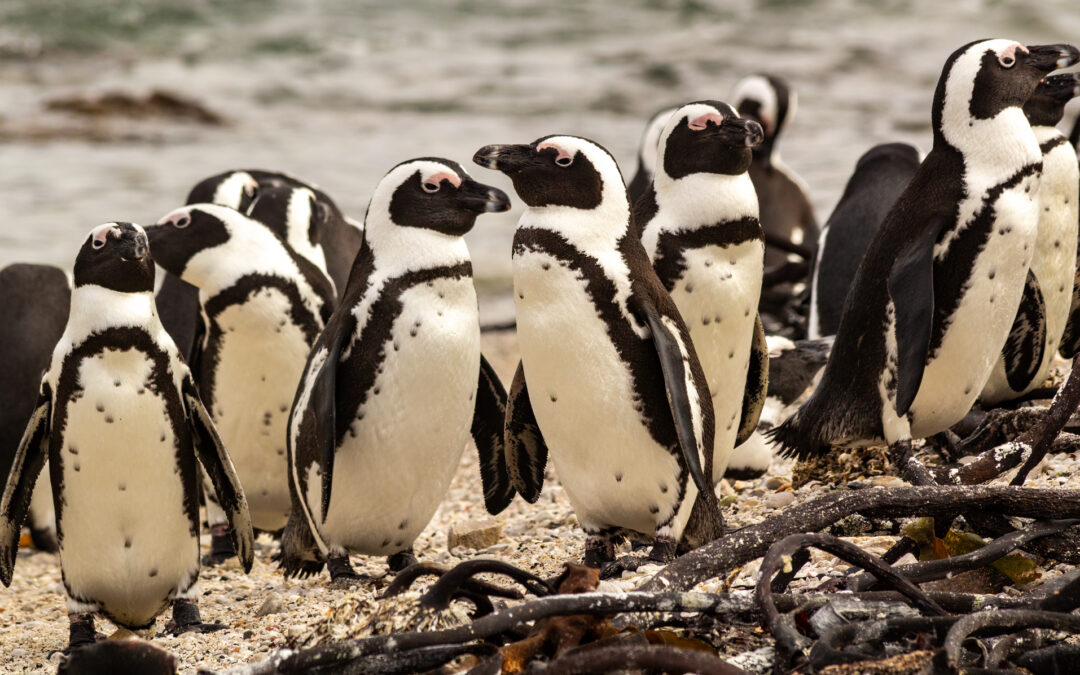
The Penguin Trail is named for this iconic bird. The Stony Point Penguin Colony in the Kogelberg Biosphere is one of only two mainland breeding colonies. The Penguin Trail ends at Stony Point on day four, when hikers have opportunity to visit the colony and observe the birds up close.
The African Penguin is one of the most recognizable seabirds on the African continent. With its black-and-white feathers, distinctive donkey-like bray, and charming waddle, this small penguin has captured the hearts of people around the world. Found only along the coastlines of South Africa and Namibia, the African Penguin is the only penguin species native to Africa. Yet despite its popularity, this remarkable bird is critically endangered and is facing a severe threat to its survival.
A Penguin Built for the African Coast
Unlike the icy Antarctic penguins that many people imagine, African Penguins thrive in relatively mild coastal environments. They live on rocky islands and mainland beaches where cold ocean currents provide an abundance of fish. Their streamlined bodies and strong flippers make them excellent swimmers, capable of diving to impressive depths in search of prey such as sardines and anchovies.
African Penguins are medium-sized birds, typically standing about sixty to seventy centimetres tall and weighing between two and five kilograms. Their black backs and white bellies serve as camouflage in the ocean. Predators looking down from above see the dark backs blending into the sea, while predators below struggle to spot the white undersides against the bright surface.
One of their most distinctive features is the unique pattern of black spots on their chests. Much like human fingerprints, no two penguins have exactly the same pattern. Scientists can use these markings to identify individual birds in the wild.
Why They Are Called “Jackass Penguins”
African Penguins are often nicknamed “Jackass Penguins” because of the loud braying sounds they make, which resemble a donkey’s call. These vocalizations are used for communication between mates, chicks, and colony members. During breeding season, penguin colonies become noisy social hubs filled with squawking, braying, and constant movement.
Breeding, Hunting, and Family Life
African Penguins typically breed in burrows, under bushes, or in sheltered rocky areas. Historically, they nested in thick layers of guano, which protected eggs and chicks from extreme heat. Unfortunately, decades of guano harvesting by humans destroyed much of this natural nesting habitat.
Their life expectancy is ten to fifteen years. They mate for life, and return to the same nesting site. They breed from March to May. The females usually lay two eggs, and both parents take turns incubating the eggs for about six weeks. After hatching, the chicks remain dependent on their parents for food and protection for about twelve weeks. During this time, the chicks are kept in creches whilst their parents hunt. They reach sexual maturity at about two years.
Whilst they appear comical and awkward on land, they are efficient swimmers and hunters. They may travel up to twenty to sixty kilometres to hunt, they can swim at speeds of up to twenty kilometres per hour, they can dive to depths of one hundred and twenty metres, and they can remain under water for up to two and a half minutes. Young penguins eventually develop waterproof feathers and head out into the ocean on their own. However, many juveniles face dangers before reaching adulthood, including predators, food shortages, and environmental changes.
Threats to Survival
The African Penguin population has declined dramatically over the past century. Once numbering in the millions, fewer than ten thousand breeding pairs are believed to remain today. They are critically endangered, and face functional extinction by 2035.
One of the biggest threats facing African Penguins is overfishing. Commercial fishing operations reduce the availability of sardines and anchovies, leaving penguins struggling to find enough food. In some years, adults abandon nests because they simply cannot feed their chicks. Their annual moult takes about twenty one days, when they are confined to land and they do not feed. It is important for them to build up adequate fat reserves before they moult. If they are unable to do so, they starve.
Climate change is also affecting ocean temperatures and fish distribution, making food even harder to locate. Oil spills have caused devastating losses as well. Penguins depend on clean, waterproof feathers for insulation and buoyancy. Even a small amount of oil can be deadly.
Habitat destruction, pollution, and human disturbance further contribute to the species’ decline. Sea predators include seals and sharks, and land predators include gennets, mongooses, otters, and leopards. Additionally, human activity has intensified many of the challenges these birds already face.
Conservation Efforts
Fortunately, conservation groups, scientists, and local communities are working hard to protect the African Penguin. Rescue organizations regularly rehabilitate injured or oiled penguins and release them back into the wild. Artificial nesting boxes are also being installed to replace lost burrow habitats.
Marine protected areas have been established near some breeding colonies to help reduce competition with commercial fisheries. Researchers continue to monitor penguin populations and study their feeding habits, migration patterns, and breeding success.
Public education plays an important role in conservation as well. Tourism connected to penguin colonies also supports local economies, demonstrating that wildlife conservation can provide both environmental and economic benefits.
Why African Penguins Matter
African Penguins are more than just entertaining birds. They are important indicators of ocean health. Because they rely heavily on fish populations and clean marine environments, changes in penguin numbers often reflect broader environmental problems affecting the ecosystem.
Their survival is closely linked to the health of southern Africa’s coastal waters. Protecting penguins helps preserve biodiversity and supports the balance of marine life in the region.
In addition, African Penguins hold cultural and educational value. They inspire curiosity about wildlife and encourage people to care about conservation. For many visitors, seeing these birds in their natural habitat creates a lasting appreciation for the natural world.
A Future Worth Protecting
The future of the African Penguin remains uncertain, but there is still hope. Conservation efforts have shown that dedicated action can make a difference. By supporting sustainable fishing practices, reducing pollution, protecting breeding habitats, and addressing climate change, humans can help ensure that future generations will continue to hear the distinctive bray of the African Penguin along Africa’s coastlines.
These resilient seabirds have survived for thousands of years in a challenging marine environment. With continued protection and awareness, they may yet overcome the threats they face today and remain one of Africa’s most beloved wildlife species.
Penguin Trail hikers are privileged to be able to visit their Stony Point colony!